How to Prevent Cockroaches at Home in Singapore: 8 Practical Tips
Cockroaches are a common concern in Singapore homes. Discover 8 practical ways to prevent cockroaches by managing food, moisture, rubbish, hiding places and entry points, plus learn how a surface insect repellent can complement your prevention routine.
Why Are Cockroaches Common in Singapore Homes?
Singapore's warm and humid environment can provide favourable conditions for cockroaches, particularly when they have access to food, moisture and sheltered hiding places.
You may notice them around kitchens, bathrooms, rubbish areas, drains, cabinets or dark corners.
Preventing cockroaches is therefore not simply about dealing with the insects you can see. A better long-term approach is to make your home less attractive and less accessible to them.
Singapore's National Environment Agency (NEA) promotes an Integrated Pest Management approach that prioritises prevention and addressing the root causes of pest problems.
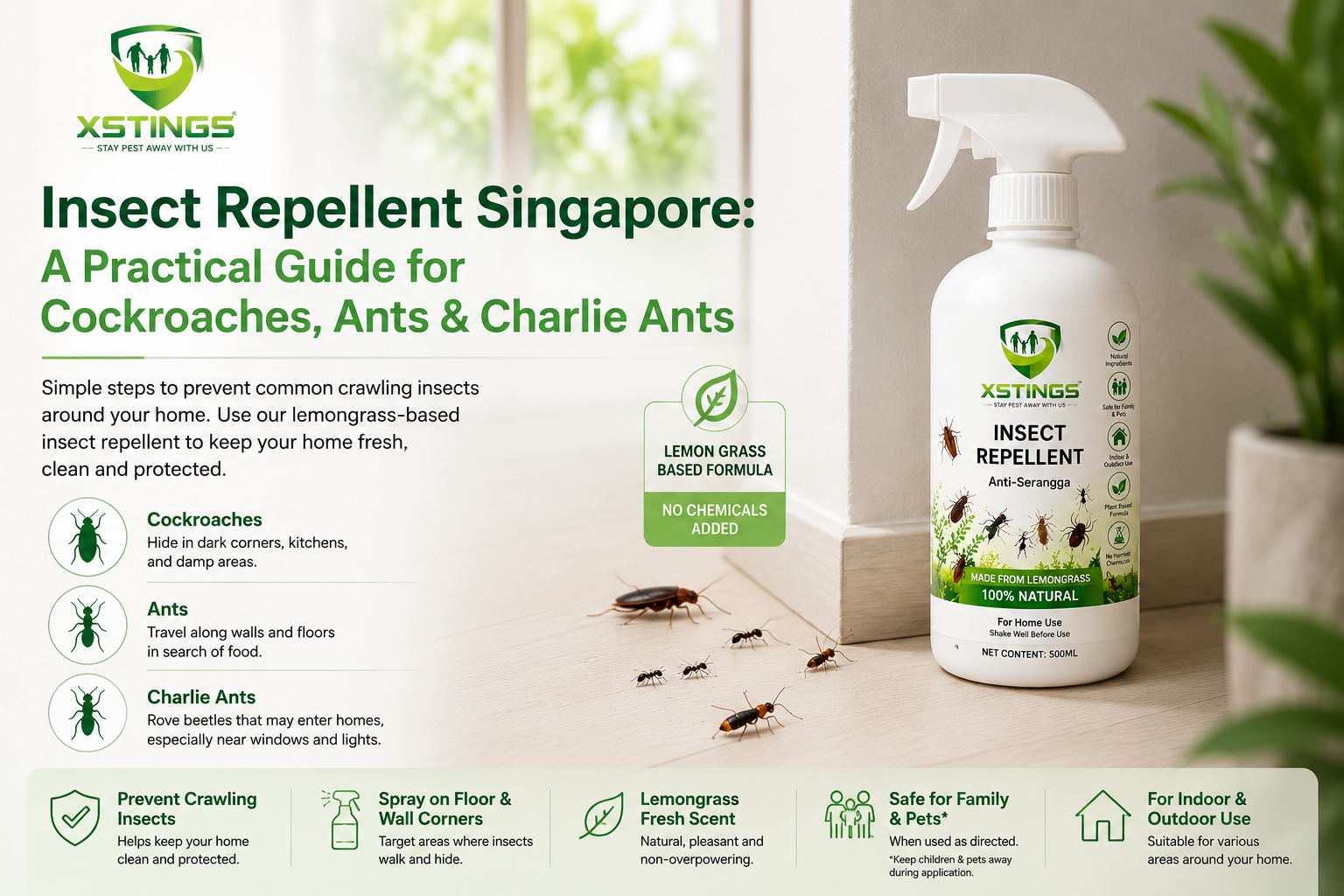
If you're looking for a broader approach to preventing crawling insects around your home, read our Insect Repellent in Singapore: Practical Guide for Cockroaches, Ants & Charlie Ants, where we cover common insect pathways, floor and wall corners, entry points and household prevention methods.
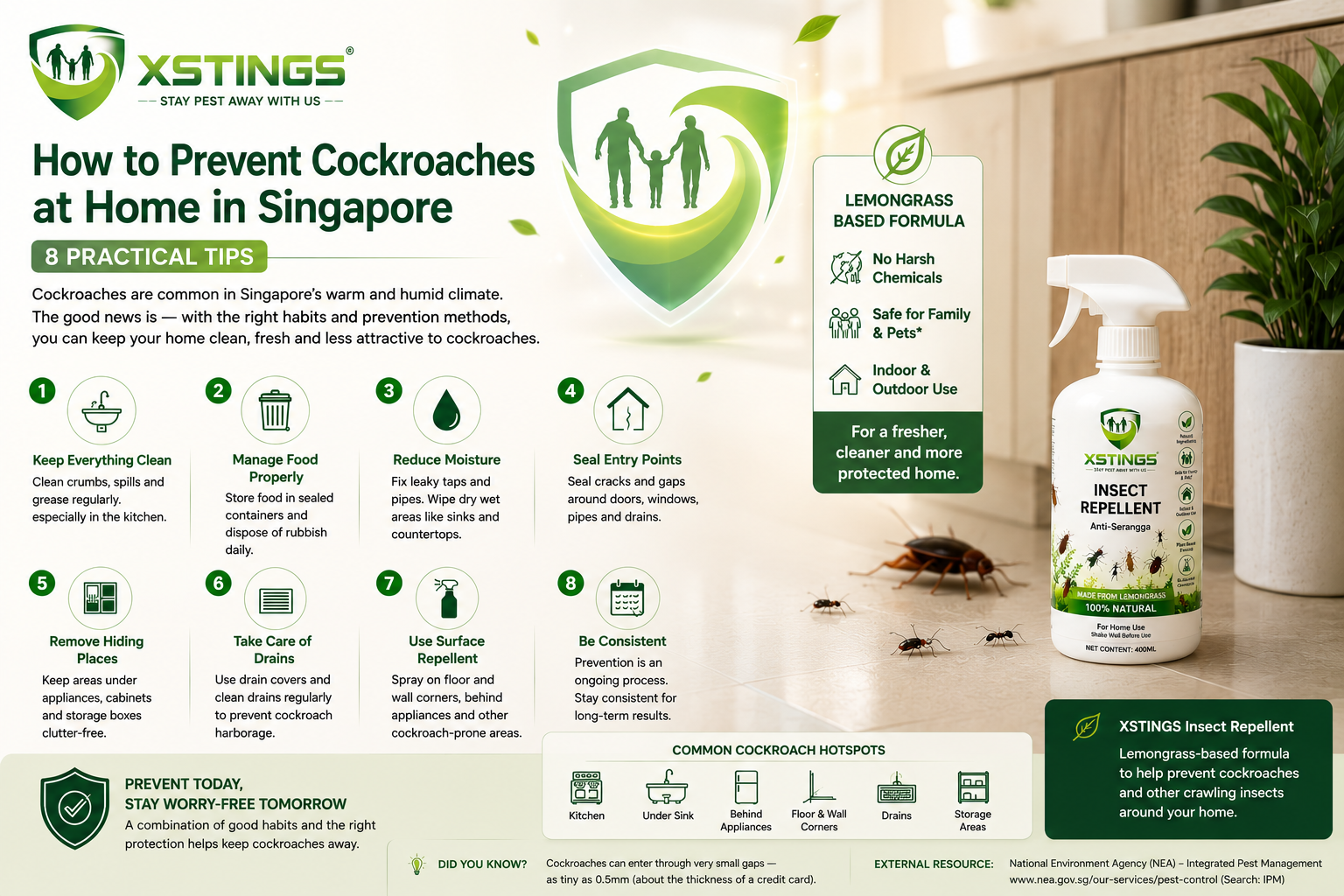
Here are eight practical steps you can incorporate into your household routine.
1. Keep Your Kitchen and Home Clean
The kitchen should be one of the first areas you inspect if you regularly notice cockroaches.
Clean Food Residue Quickly
After preparing or eating food:
- Wipe countertops
- Clean spills
- Sweep or vacuum crumbs
- Clean underneath dining tables
- Wash dirty dishes
- Clean around cooking areas
Small amounts of food that seem insignificant to us can still provide a food source for pests.
NEA guidance recommends maintaining cleanliness and cleaning food or refuse spills promptly as part of pest prevention.
2. Store Food Properly
Don't leave easily accessible food around the kitchen overnight.
Use Sealed Containers
Consider storing dry foods such as biscuits, cereal, sugar and snacks in properly closed containers.
Pay particular attention to opened packages.
Pet food should also not be unnecessarily left exposed.
NEA guidance recommends keeping food in tightly covered containers and maintaining areas underneath sinks and cooking equipment in a clean and dry condition.
3. Reduce Moisture Around Your Home
Food isn't the only thing cockroaches look for.
Water and damp environments can also make areas more attractive to them.
Check Kitchens and Bathrooms
Look around:
- Under sinks
- Around leaking pipes
- Bathroom corners
- Wet countertops
- Floor areas
- Around washing machines
- Damp cabinets
Repair leaks where possible and wipe up unnecessary standing water.
Keeping these areas dry can form part of a broader prevention strategy.
4. Seal Cracks, Gaps and Entry Points
Cockroaches can hide in narrow spaces that are easy to overlook.
Inspect Your Home Carefully
Check:
- Wall cracks
- Floor gaps
- Areas around pipes
- Cabinet gaps
- Door areas
- Window areas
- Floor traps
- Drain areas
NEA guidance recommends sealing holes and crevices in ceilings, walls and floors and ensuring floor traps and downpipes are appropriately covered.
Fixing potential entry and hiding points can help make the environment less suitable for pests.
5. Manage Rubbish Properly
Your rubbish area can become an easy food source if it isn't properly managed.
Don't Leave Food Waste Exposed
Try to:
- Keep rubbish bins covered
- Bag food waste properly
- Clean spills around the bin
- Empty rubbish regularly
- Keep the surrounding floor clean
This is especially important in the kitchen.
NEA specifically identifies proper refuse management as an important component of cockroach prevention.
6. Remove Potential Hiding Places
Cockroaches prefer sheltered areas.
Clutter can provide additional places for them to hide.
Check Cardboard and Storage Areas
Pay attention to:
- Old cardboard boxes
- Newspapers
- Storage rooms
- Cabinets
- Areas behind appliances
- Under sinks
- Cluttered corners
Remove items you no longer need and organise storage areas so they can be inspected and cleaned easily.
NEA's guidance similarly recommends disposing of unwanted boxes, crates, newspapers and other materials that can provide pest shelter.
7. Pay Attention to Floor and Wall Corners
This step is particularly relevant to our Day 1 discussion.
Instead of randomly applying products everywhere, first identify the locations where insect activity repeatedly occurs.
Monitor Common Cockroach Areas
Check areas such as:
Floor corners
Wall edges
Behind refrigerators
Under cabinets
Under sinks
Around rubbish bins
Near drains
Around entrances
If you're using a surface insect-repellent product, apply it only to surfaces and locations permitted by its directions.
Where XSTINGS Fits Into Your Prevention Routine
XSTINGS is a lemongrass-based insect repellent intended to complement a household insect-prevention routine when used according to its product directions.
Rather than relying on one solution alone, combine appropriate repellent use with cleanliness, food management, moisture reduction and monitoring of common insect pathways.
For permitted surface applications, follow the XSTINGS directions regarding areas such as floor or wall corners and the recommended application frequency.
[Shop XSTINGS Insect Repellent →]
Internal link this text to your XSTINGS product page.
8. Make Prevention a Regular Routine
Cockroach prevention isn't something you need to think about only when you see one.
Regular prevention is more useful.
Try a Simple Weekly Check
Take a few minutes to inspect:
Kitchen → Food residue and rubbish
Sink → Moisture and leaks
Floor → Crumbs and difficult-to-reach corners
Cabinets → Clutter and food storage
Drains → Condition and cleanliness
Walls → Cracks and gaps
Appliances → Hidden areas underneath and behind them
Insect pathways → Areas where you've previously noticed activity
This is consistent with Singapore's newer Integrated Pest Management direction, which emphasises proactive prevention, monitoring and addressing the causes of pest activity instead of relying solely on reactive treatments.
Frequently Asked Questions About Cockroach Prevention
Why do cockroaches keep appearing in my home?
Food, water, shelter and available entry points can all contribute. Look for crumbs, exposed food, rubbish, moisture, clutter, cracks and other possible hiding locations.
Why do I see cockroaches in my kitchen at night?
Cockroaches commonly seek dark, sheltered areas and can emerge in search of food. NEA educational material notes that cockroaches favour warm, dark places and commonly search for food at night.
Should I spray every part of my floor?
Not necessarily. If you're using an insect-repellent product, follow its specific directions regarding where and how it should be applied.
Can lemongrass be used in insect-repellent formulations?
Lemongrass is used in various plant-based insect-repellent formulations. However, the performance of a finished product depends on its complete formulation, application and intended use.
What if I continue seeing many cockroaches?
A persistent or significant infestation may require professional pest-management assistance. Prevention measures can still be important for reducing food, water, shelter and potential entry points.
Final Thoughts
Preventing cockroaches in a Singapore home works best as an ongoing routine rather than a one-time reaction.
Keep your kitchen clean, properly store food, manage rubbish, reduce moisture, remove unnecessary clutter and seal potential entry points.
Pay particular attention to floor corners, wall edges, kitchens, bathrooms, drains and areas behind appliances.
When appropriate, a surface insect repellent such as XSTINGS can complement these preventative habits when used according to its directions.
The objective is simple:
Make your home less attractive and less accessible to unwanted crawling insects.